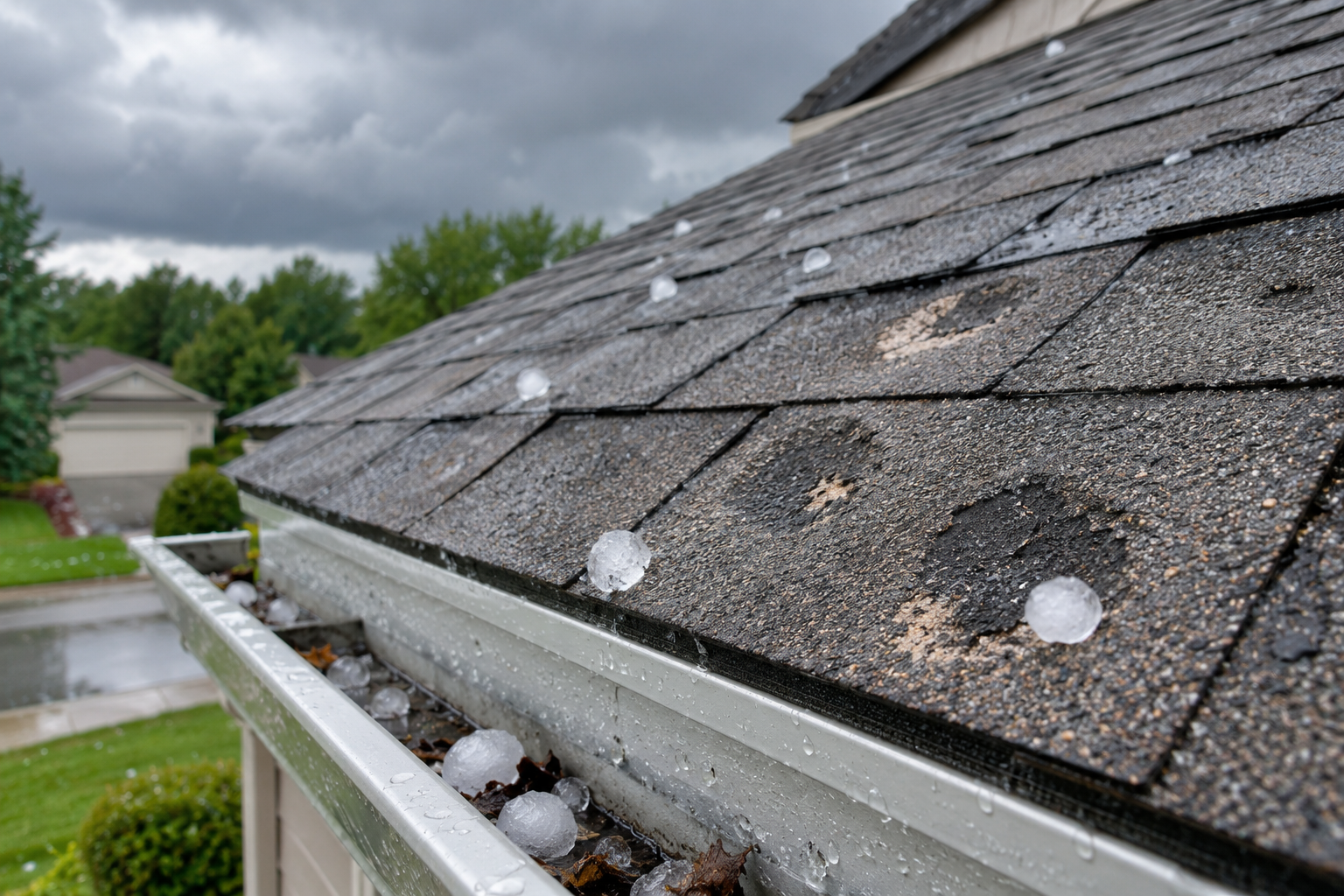
Did the last storm dent your gutters while the shingles above them looked fine from the driveway? Hail damage on roof surfaces can leave bruises, bare spots, cracked shingles, and dents in metal roof parts. Some damage stays hard to see. So even if your roof looks fine, it may still need repairs.
The Insurance Information Institute reports 5,432 hail events nationwide in 2025, up from 5,373 in 2024. Texas had the largest state total. If a storm crossed your neighborhood, take time to check for damage. You may catch a problem before the next rain.
What Hail Damage on a Roof Means
Roof hail damage happens when hail strikes and harms the roof covering or its parts. On asphalt shingles, a hard hit can fracture the fiberglass mat, which helps hold the shingle together. Roofers often call this damaged spot a bruise.
If the impact also removes granules, sunlight reaches the asphalt beneath them. Over time, that bare area can wear faster. But a bare spot alone does not prove that hail fractured the mat.
Functional Damage vs. Cosmetic Damage
Your policy may cover some damage and exclude other types. That is why the difference matters.
- Functional damage: Fractured mats, split shingles, and torn flashing can weaken the roof’s ability to keep water out.
- Cosmetic damage: A dent may change the look of a metal panel while leaving it able to shed water.
- Policy exclusions: If your policy has a cosmetic damage exclusion, it may exclude dents that affect appearance alone.
A hail damaged roof can have both types. For that reason, an inspector needs to check each slope and the parts around it.
What Causes Hail Damage on a Roof?
Hail begins when thunderstorm updrafts lift raindrops into freezing air. The stones grow as more water freezes onto them. They fall once the updraft can no longer hold them up.
Hailstone Size and Fall Speed
The National Severe Storms Laboratory gives these expected speed ranges. They help explain how hard hail can hit. But speed alone cannot tell you whether a roof needs repairs.
| Hailstone size | Expected fall speed | Possible roof effects |
| Under 1 inch | 9 to 25 mph | May disturb loose granules on worn shingles |
| 1 to 1.75 inches | 25 to 40 mph | May bruise shingles or dent soft metals |
| 2 to 4 inches | 44 to 72 mph | May split shingles, crack tile, or puncture roofing |
Quarter-sized hail measures about 1 inch across. But there is no fixed size that always causes hail damage to roof materials. Damage also depends on the stone’s hardness, the wind, and the roof’s condition.
Roof Age, Wind, and Material
Your neighbor’s roof may need work while yours does not, even after the same storm.
- Wind direction: Strong winds can drive hail against some slopes harder than others.
- Roof age: Older 3 tab shingles may become brittle after years of heat and sun.
- Roofing material: An impact that dents metal may crack clay tile instead.
- Shelter and slope: Nearby trees and buildings can change exposure, so hail damage on roofs may vary across a property.
These factors explain why roof damage from hail needs an inspection, even if you know the hailstone size.
Signs of Hail Damage on Your Roof
Ground-Level Signs After a Storm
Once the storm passes and conditions are safe, walk around your home. Stay clear of fallen branches and power lines.
- Look for dented gutters and downspouts, since thin metal often shows impacts more clearly than shingles.
- Notice any fresh granule buildup in your gutters or sandy piles near downspout outlets. Sudden granule loss deserves a closer look.
- Photograph torn window screens and dents on air conditioning fins, mailboxes, fence posts, and garage doors.
- Look for spatter marks, where hail has knocked dirt or oxidation off a surface.
Roofers call damage to nearby items collateral damage. These clues help show where hail struck. But they cannot prove shingle damage or tell you the exact hail size.
Shingle and Roof Component Damage
An inspector looks for several signs of asphalt shingle roof hail damage. Marks can vary in size. So a fixed 1 to 4 inch range is not a sound test.
- Impact bruises: Random spots may feel softer where the mat has fractured, even if the surface looks intact.
- Bare areas: Missing granules may reveal asphalt or an exposed mat beneath it.
- Cracks and splits: Fresh breaks around impact points can show where a hailstone struck.
- Damaged roof parts: Roof vents, ridge caps, pipe boots, and chimney or skylight flashing need checks for dents, cracks, and tears.
Leave close checks to a roofer. Pressing or rubbing shingles yourself can cause more damage and disturb the evidence.
Indoor Signs of a Roof Leak
If you notice water stains on ceilings after rain, arrange a leak check promptly. Damp attic nail heads, wet insulation, or a musty smell also need attention.
These signs can come from a roof leak, but condensation and other moisture sources can cause them too. A dry ceiling does not rule out storm damage either.
Hail Damage by Roofing Material
The same storm can leave different marks on different roofs. This table shows what a roofer may find on each type.
| Roofing material | Damage an inspector checks for |
| Asphalt shingles | Bruises, missing granules, exposed mat, and cracked tabs |
| Standing seam metal | Dents, damaged seams, coating damage, and problems at attachments |
| Stone-coated steel | Dented panels, damaged joints, and loss of stone coating |
| Wood shakes | Fresh splits that may show sharp edges and lighter wood inside |
| Tile and slate | Cracked pieces, chipped edges, punctures, or displaced tiles |
| TPO and modified bitumen | Punctures, cracks, bruising, and possible damage beneath the membrane |
For example, hail damage to a slate roof may include a fine crack that you cannot see from the yard. On a flat roof, an inspector may need further checks for wet insulation beneath the surface.
Roof Wear That Can Look Like Hail Damage
Before blaming a storm, the inspector needs to rule out other causes.
- Blistering: Bubbles in asphalt shingles can break open and leave small craters.
- UV cracking: Years of sunlight can dry asphalt and cause cracks without a hail impact.
- Granule weathering: Shingles shed some granules as they age, so loose granules alone do not confirm hail damage.
- Scuffs and manufacturing defects: Foot traffic can leave marks, while product flaws may create repeated patterns.
No single pattern settles the cause. The roof’s age, earlier photos, nearby damage, and close inspection help explain what happened.
What a Hail Damage Inspection Includes
A useful report should show you where the damage sits and why it needs attention. Inspectors often use a 10 ft by 10 ft test square to record confirmed impacts on representative slopes.
They also check the roof beyond those squares. When safe access allows, the inspection should cover each slope, flashing, vents, and drainage areas.
Photos, Measurements, and a Scope Report
Chalk marks help draw attention to suspected hits in photos. But the marks themselves do not prove damage. Clear close-ups and wider roof photos should support each finding.
At Kindred Construction, we document roof conditions and explain the repair options in a written scope report. Our team works with the roofing systems listed above and checks attic conditions where safe access allows.
Are you searching for hail damage roof repair near me? We offer free roof inspections across Amarillo and nearby towns. You keep the report, so you can review the findings before deciding on the work.
What to Do After Hail Damages a Roof
If you suspect damage, start documenting it while the signs are fresh. You can arrange a roofing inspection while notifying your insurer promptly.
- Record the storm. Take photos from the ground and note the date, visible damage, and any leaks.
- Stay off the roof. Loose materials can make a roof damaged by hail unsafe to walk on.
- Limit further damage. Arrange safe temporary protection for active leaks, and keep photos and receipts.
- Review the policy. Check the wind and hail deductible, exclusions, and notice requirements with your insurer.
- Compare the documents. Review the roofer’s estimate alongside the adjuster’s findings before agreeing to permanent repairs.
Deductibles, Coverage, and Filing Deadlines
If your deductible uses a %, check which insured value it applies to. If repair costs fall below the deductible, you may get no payment. But do not miss notice deadlines while you get quotes.
With actual cash value coverage, the insurer subtracts depreciation for age and wear. Replacement cost coverage can pay without that deduction, subject to policy terms, limits, and the deductible. Your insurer may release some funds only after repairs. Texas roof insurance guidance explains these differences.
Our hail damage insurance claim guide covers the process and Texas filing deadlines. Check the deadline in your own policy. Each claim may have a different time limit.
The Texas Department of Insurance states that contractors cannot waive, rebate, or absorb your deductible. A contractor doing the repairs also cannot act as your public adjuster on that claim.
Repair or Replace a Hail Damaged Roof
The right choice depends on how much damage the roof has. It also depends on whether sound repairs are possible.
- Spot repairs: These may suit scattered damage if nearby shingles remain sound and compatible materials are available.
- Partial reroofing: Replacing a damaged slope may work if the remaining roof is sound and installation requirements allow it.
- Full replacement: Widespread damage, brittle shingles, or repair limits may make replacement the better option.
- Decking repairs: Damaged wood beneath the roof needs attention, but a local decking problem does not automatically require full replacement.
If the roof is already near the end of its life, repeated patches may offer poor value. Kindred Construction compares repair and replacement costs with you before you choose.
Is Your Roof Hail Storm Ready?
You cannot prevent hail. But you can repair weak areas and compare stronger materials before the next storm. Keep gutters clear and address loose flashing or damaged shingles early.
The Insurance Institute for Business and Home Safety cites a 2019 estimate that asphalt shingles cover about 80% of U.S. residential roofs. Its research also shows why impact performance matters when choosing shingles.
Impact-Resistant Roofing Options
- Class 4 impact-resistant shingles: These meet the highest class under UL 2218 testing. Even so, the rating does not make them hailproof.
- Steel with stone coating: Stone-coated steel roofing offers impact-resistant options. It does have granules, and coating loss can occur. Our listed installed range is $12 to $18 per square foot, depending on the roof and profile.
- Metal with concealed fasteners: Standing seam metal roofing reduces exposed fastener holes across the main panels. Seams, edges, and roof penetrations still need sound installation.
- Insurance savings: A qualifying roof may earn a premium discount. Confirm the product requirements and any cosmetic damage exclusion before ordering materials.
Hail Damage Roof Repair in West Texas
If the roof looks fine from the driveway, those fresh gutter dents still need a closer look. An inspection can confirm needed repairs or give you evidence that no hail repairs are necessary.
Kindred Construction provides storm damage restoration and West Texas roofing, with a 10-year workmanship warranty on installations. Our crews serve Amarillo, Lubbock, and surrounding communities.
Call 806-440-2167 or contact our team for an inspection. We will explain the photos, the roof’s condition, and your options before you commit to repairs.
Frequently Asked Questions
1. How Soon Does Hail Damage on a Roof Start Causing Leaks?
A puncture can leak during the same storm. Other damage may not leak until later. There is no fixed timeline, so document suspected damage even if your ceilings stay dry.
2. Can Pea-Sized Hail Damage a Roof?
It is less likely to cause serious damage to sound shingles. However, if the roof is worn, small impacts may disturb loose granules. An inspection can separate storm damage from existing wear.
3. How Many Hail Hits Does It Take Before Insurance Replaces a Roof?
There is no universal hit count. Insurers consider confirmed damage, its spread, repair options, and policy terms. Finding 8 hits in a test square does not guarantee replacement.
4. Does a Dent on a Metal Roof Count as Hail Damage?
Yes, but coverage depends on the policy and the dent’s effect. If it harms a seam, drainage, or water resistance, the damage may extend beyond appearance. Kindred Construction documents both types.
5. Should a Roofer or the Insurance Company Be Called First?
You can contact both promptly. A roofer can record damage and give you a written estimate. Meanwhile, your insurer can explain when to send notice. If water is entering your home, arrange safe temporary protection without delay.