
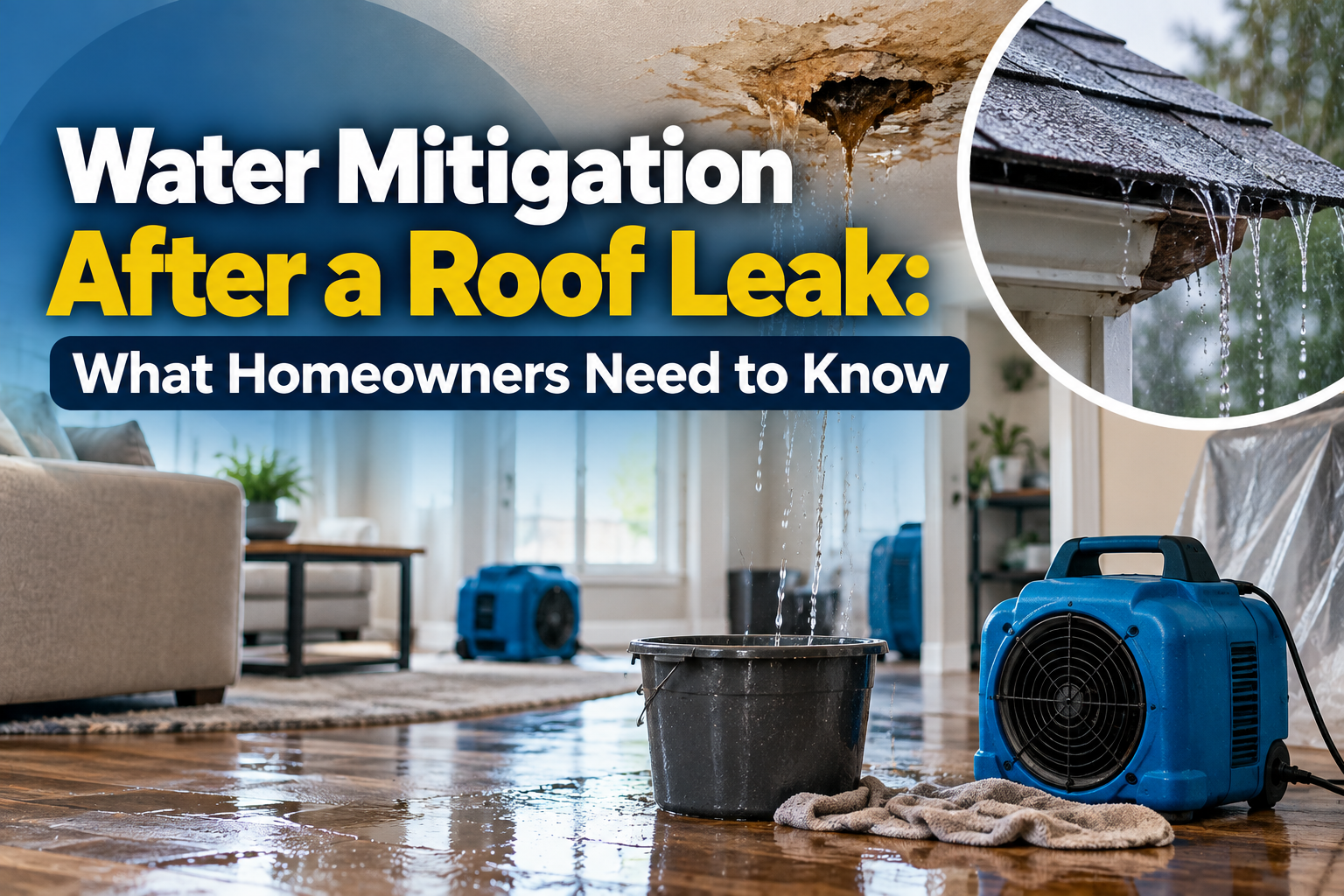
Has a brown ring shown up on your ceiling that grows wider after every storm? Water mitigation after a roof leak stops water from spreading and dries wet materials before repairs begin. It includes water extraction, moisture detection, structural drying, and dehumidification to help limit rot and mold.
If the drip stops, you might feel the worst has passed. However, moisture can stay above your ceiling long after the rain ends. Acting early gives you a better chance of keeping roof leak water damage from becoming a larger repair.
Emergency Steps to Take After a Water Leak From Roof Damage
Your first concern should be keeping everyone safe while you limit further damage. For emergency roof leak cleanup, follow these steps:
- If you can safely reach the drip, contain the water with buckets. Then protect your belongings by moving rugs and furniture away.
- Only shut off power to the affected area if you can reach a dry electrical panel safely. If water surrounds electrical equipment, leave and call an electrician because water and electricity can cause fatal shocks.
- If your ceiling is bulging, leave the room and keep everyone out. Do not puncture it yourself, since trapped water may cause a ceiling collapse. Red Cross guidance advises leaving buildings with sagging ceilings.
- Do not climb onto a wet roof, and skip the DIY tarp. Let trained crews handle emergency roof tarping when conditions allow.
- From a safe place, document the damage with dated photos and video. Keep receipts for urgent work so your insurer can review them.
Who to Call for a Water Leak in the Ceiling
Call a roofer to find and stop the leak, plus a water damage cleanup team for wet building materials. If you suspect a pipe leak, contact a plumber instead. Visible dripping, sagging, or storm damage tells you when to call a roofing professional: as soon as possible.
At Kindred Construction, we provide water mitigation and coordinate the restoration that follows. Our 24/7 emergency service covers Pampa and Plainview, with tarping and mitigation on the same visit when conditions allow. For hail-related leaks, our 24 hour hail response runs year-round.
How Quickly Can Roof Water Damage Spread?
Water can start spreading as soon as it enters your home. Because drywall and insulation absorb moisture, damage may reach beyond the stain you see. The US EPA recommends drying wet areas within 24 to 48 hours to help prevent mold growth. That is a goal, not a safe waiting period.
If water keeps entering, roof decking and plywood sheathing can swell and lose strength. Moisture may also travel along roof framing and into wall cavities. This leaves hidden roof leak damage behind walls and ceilings that look dry.
Over time, even small leaks lead to major structural damage if no one stops them. Structural water damage can weaken the wood that supports your home. Wet insulation also reduces heat resistance, or R-value, which can increase heating and cooling costs. Meanwhile, damp materials can affect indoor air quality.
Signs of Water Damage Caused by Roof Leaks
Interior Signs of Roof Water Damage
The common signs of a roof leak often appear indoors before you notice missing shingles. Look for these signs of ceiling water damage:
- Water stains appear as brown or yellow rings, although plumbing leaks can leave similar marks.
- If you notice discoloration or streaking on walls, check whether it grows after rain.
- Peeling paint or bubbling drywall can mean moisture sits behind the finish.
- Sagging ceiling panels need urgent attention, especially if you also notice soft upstairs floors or warped wood near door frames.
- A musty odor may point to hidden moisture, even if you cannot see mold.
Attic and Insulation Clues
Only look from a safe access point if the attic has sound footing and no electrical hazards. A flashlight may reveal damp insulation, rusted nails, or stains on wood framing around rafters and trusses. However, old stains alone do not prove a leak remains active.
Daylight visible through the decking can suggest a gap, although designed vents also admit light. Outside, granules collecting in the gutters may indicate shingle wear. A roofer can confirm whether these clues point to attic water damage.
Common Causes of Roof Leaks in West Texas
A ceiling stain may sit far from the roof opening because water follows framing before it drips. These faults deserve a close inspection:
- Damaged or missing shingles can expose your roof after wind or hail damage.
- Flashing failures let water through joints, especially if flashing around chimneys and vents has gaps.
- Pipe boot or vent collar deterioration can leave cracks around roof pipes as rubber ages.
- Clogged gutters can hold water near roof edges, while faults in the drip edge affect drainage.
- Skylight installation errors, improperly sealed roof valleys, and exposed nails create more places for water to enter.
- Ice dams can force meltwater beneath shingles, while wind-driven rain may enter gaps that stay dry during light rain.
An aging roof may have several weak spots. Meanwhile, poor attic ventilation can cause condensation that resembles a leak. Our storm damage restoration team checks the source and follows the water path before planning roof leak restoration.
Water Mitigation, Mold Remediation, and Restoration
These services address different parts of the damage, so your home may need more than a roof patch.
| Phase | What it does | When it happens |
| Water mitigation | Controls the leak, removes water, and dries materials | Starts promptly and continues until drying goals are met |
| Mold remediation | Contains and removes mold and affected materials | If the inspection finds growth that needs removal |
| Water damage restoration | Repairs or replaces damaged drywall, insulation, flooring, and finishes | After drying and any needed mold work |
If you start water damage repair too soon, new drywall can trap moisture against damp framing. That is why a dry surface alone should never decide when rebuilding begins.
Water Extraction and Moisture Detection
Crews must stop the water source first, then remove standing water. For emergency water extraction, they choose portable or truck-mounted equipment based on access and the amount of water. They also assess the water category, which describes contamination risks.
Next, moisture detection and mapping show how far the water traveled. Moisture meters check materials, while thermal imaging cameras reveal temperature patterns that may suggest moisture. Crews still need meter readings to confirm those areas.
Structural Dry-Out and Dehumidification
During structural dry-out and dehumidification, crews control airflow and humidity so wet materials can release moisture. Daily monitoring tracks progress and shows whether the setup needs changes. The IICRC drying advisory explains why crews must assess and monitor the whole affected structure.
Final moisture checks confirm drying goals. Clearance testing serves a separate role after mold remediation when the project requires it. Your records should include readings and photos, so you can see why crews consider the area ready.
Air Movers vs Household Fans
Industrial air movers direct airflow across wet surfaces to speed evaporation. Meanwhile, commercial dehumidifiers remove moisture from the air so it does not remain indoors.
A household fan can help air move, but it cannot confirm that hidden materials have dried. Relying on touch alone is a common mistake when drying water damage. If mold or contaminated water is present, get professional guidance before running fans that could spread contamination.
Does Wet Insulation Need to Be Replaced?
Often, yes, especially if it contains dirt, mold, or trapped moisture. Cellulose loose-fill insulation can mat down when wet, so replacement is usually the safer choice. Fiberglass batts may allow drying and reuse after limited clean-water exposure, depending on their condition and manufacturer guidance. The Insulation Institute explains these differences and recommends replacement when doubt remains.
Our team includes insulation removal and replacement in the dry-out scope when your home needs it.
Mold Growth After a Roof Leak
Mold spores occur naturally, but wet materials give them a place to grow. If drywall paper and wood stay damp, they provide conditions for mold growth.
Watch for musty odors or visible black mold patches, but remember that color cannot identify the mold type. Black mold is not a diagnosis. Mold exposure can cause respiratory problems and allergic reactions, especially in sensitive people. CDC guidance explains why color does not show how dangerous mold is.
The US EPA says homeowners can often clean areas smaller than about 10 ft². However, extensive water damage, hidden growth, contaminated water, or health concerns warrant professional help. Choose experienced professionals who follow guidance such as IICRC standards. If you suspect mold in the HVAC system, leave it off to avoid spreading spores into unaffected areas.
The Texas Department of Insurance advises checking a mold professional’s state license and obtaining a remediation certificate. Texas licensing rules include exemptions, so the EPA’s 10 ft² guidance is not a licensing cutoff.
We coordinate licensed mold remediation when needed and use antimicrobial treatment where the assessment supports it. Treatment does not replace mold removal or drying, and visible growth does not always need testing before cleanup.
Does Homeowners Insurance Cover Water Damage From Roof Leak Events?
Coverage depends on what caused the leak and what your policy includes. Keep these distinctions in mind when preparing a water damage insurance claim.
Sudden Damage and Gradual Damage
Policies often cover sudden and accidental water damage from a covered storm. However, gradual damage from ongoing leaks or wear and tear usually falls outside coverage.
If your insurer says you failed to mitigate the damage, photos, receipts, and moisture logs help show your response. They support your claim, but cannot guarantee payment. Keep those records whether you handle the claim yourself or hire a public adjuster.
Our roof inspection helps document roof conditions before the adjuster’s visit. Notify your insurer promptly and discuss permanent repairs before work begins, while arranging urgent protection without delay.
Actual Cash Value and Replacement Cost Value
Actual cash value deducts depreciation for age and condition. Replacement cost value reflects the cost of repair or replacement at current prices, subject to policy terms. Your deductible applies either way.
With replacement cost coverage, an insurer may hold back recoverable depreciation until you complete repairs. An actual cash value policy does not automatically release that money later. The Texas insurance payment guide explains the difference.
What to Expect After Drying Is Complete
Once moisture readings meet drying goals and any mold work is complete, repairs and reconstruction can begin. Crews remove materials they cannot save earlier if needed for drying.
Cleaning, sanitizing and deodorizing: Your cleanup plan should suit the type of water and the materials it reached.
Your plan should include roof repair or replacement, since an open leak can undo the interior work. Afterward, keep gutters and downspouts clear and maintain attic ventilation. Schedule seasonal inspections, ideally twice yearly and after major storms, to check flashing and seals around chimneys and skylights.
Our roofing contractors in Amarillo coordinate roof work, drying, and rebuilding. If you need roof repair in Lubbock, we also serve Lubbock and Canyon through our residential and commercial roofing services.
Free Roof Inspection and Emergency Water Mitigation
If a stain grows after rain, get the source checked before covering it with paint. Kindred Construction has served West Texas homeowners for over 15 years, with more than 3,000 roofs completed and 1,500 storm repairs.
We offer same-day extraction when conditions and crew availability allow, clear moisture readings, and records for your insurance claim. For a free roof inspection, call our team at 806-440-2167 and describe what you can safely see.
Frequently Asked Questions
1. How Quickly Should Water Extraction Start After a Roof Leak?
Start as soon as the area is safe, ideally within the first 24 hours. Because moisture spreads quickly, do not wait for mold to appear before arranging help.
2. What Is the Difference Between Water Mitigation and Water Damage Restoration?
The first limits further damage through extraction, drying, and contamination control. The second repairs your home after crews confirm that materials are ready for rebuilding.
3. How Long Does Water Damage Take to Dry After a Roof Leak?
Surface drying may take 1 to 2 days, while deeper framing or subfloor drying can take several days or weeks. The amount of water, humidity, and access affect timing, so moisture readings should guide the decision.
4. Will Water in the Attic Dry Out on Its Own?
Some moisture can evaporate, but you cannot rely on that to dry soaked insulation or enclosed wood. If water reached your attic, arrange moisture checks before assuming the roof water damage has ended.
5. Does Homeowners Insurance Cover Mold From a Roof Leak?
It may cover mold-damaged items after a covered loss. However, separate mold cleanup and testing often require added coverage, while slow-leak damage usually falls outside the policy. Confirm your specific limits with your insurer.