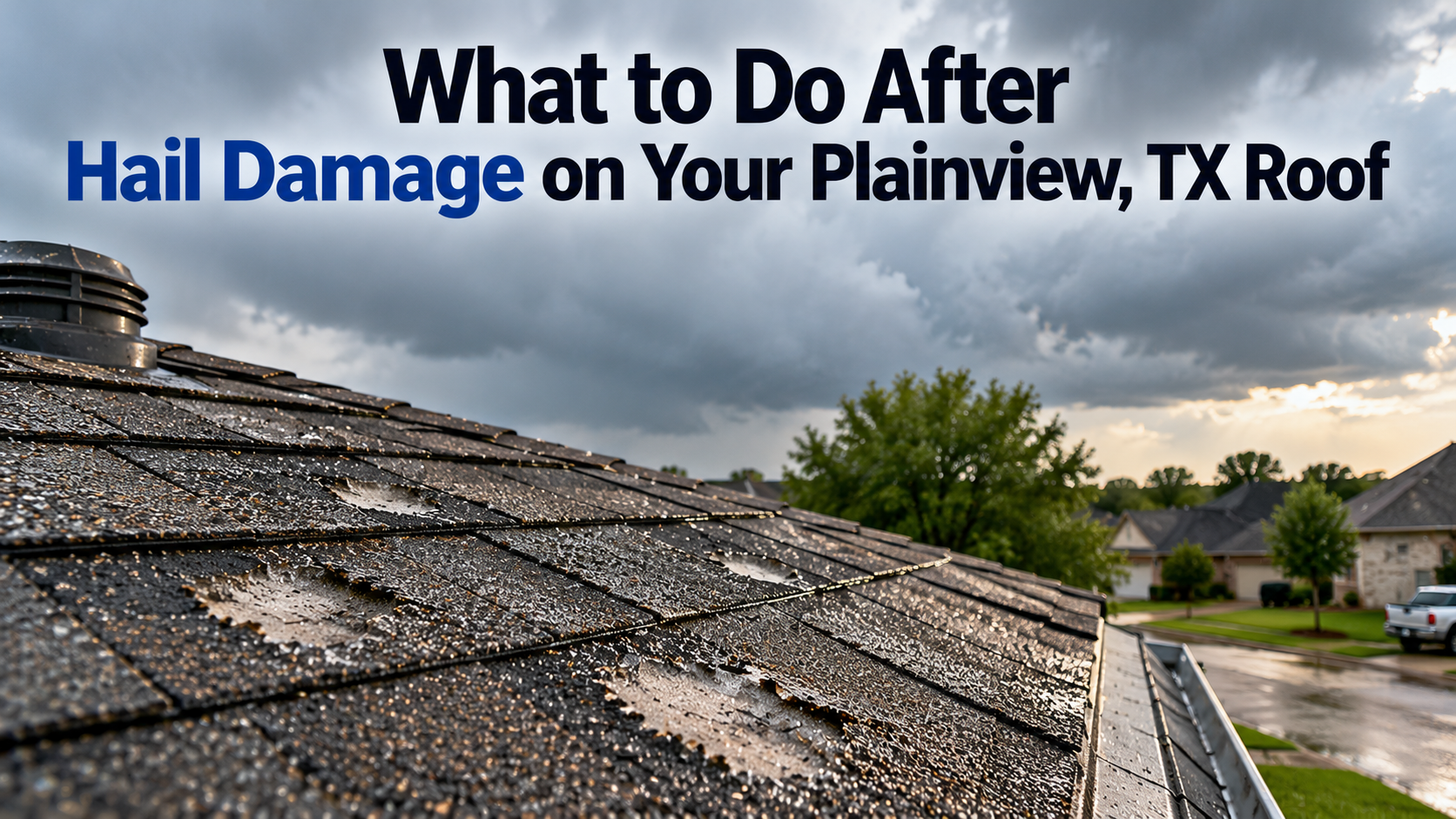
Did the last storm leave dents in your gutters, shingle granules in your yard, or a new water stain on your ceiling? Hail can damage a roof in just a few minutes, and the steps you take over the next few days can make a big difference to your roof repair and your insurance claim. According to the National Insurance Crime Bureau, Texas had 902 hail events with major damage in 2025, which made it the top state for hail damage for the 11th year in a row.
Not sure what to do after storm roof damage? First, make sure everyone is safe, cover any open areas to stop leaks, and take photos of all the damage. After that, book a storm damage roofing inspection before you sign a contract or file your claim, so you know exactly what the storm did to your roof.
In this guide, Kindred Construction explains each step for Plainview homeowners in the right order, from the first hour after the hail to the final city inspection.
Why Hail Damage Needs Quick Action in Plainview
Plainview is located on flat, open land in Hale County, so there is very little to slow down a storm before it reaches your home. On May 22, 2026, the National Weather Service office in Lubbock reported that several storms joined together over Hale County and created the strongest storm of the day. Large hail fell near Petersburg, and heavy rain flooded fields and roads across the area.
About a month later, the National Weather Service recorded a 70 mph wind gust at the West Texas Mesonet weather station in Plainview. Large hail can crack and damage shingles, while strong winds can lift or loosen them. Since both hail and wind can damage a roof during the same storm, a full roof inspection is important to find every problem.
Here are the 7 steps to follow after hail hits your roof, in the order you should take them.
Step 1: Check for Hail Damage Safely From the Ground
The safest first step is to check for damage from the ground and from inside your home. Wet shingles can be very slippery after a storm, and broken pieces of metal or fallen power lines may be hidden in the debris, so it is better not to climb onto the roof yourself.
Here are the main signs of hail damage you can check safely:
- Gutters and downspouts: Look for new dents in your gutters and for shingle granules collecting at the end of your downspouts. A lot of loose granules usually means the hail has worn away part of the shingle surface.
- Soft metals: Check your roof vents, AC unit fins, and mailbox for fresh dents. If hail dented these soft metals, there is a good chance it also hit your shingles.
- Windows, screens, and siding: Look for torn screens, cracked glass, and chipped siding around the house. This exterior storm damage should go in the same claim as your roof damage.
- Ceilings and the attic: Look for water stains on the ceiling, wet insulation, or daylight coming through the roof boards. Any of these signs means water is already getting into your home, so the roof needs quick attention.
Step 2: Stop Roof Leaks With Temporary Repairs
If water is coming in, act quickly to protect your home. The Texas Department of Insurance advises homeowners to make temporary repairs to stop more damage and to keep all the receipts. However, it also says not to make permanent repairs until the insurance adjuster has seen the damage, so any roof repair after storm damage should stay limited to a tarp or a small patch for now.
Kindred Construction runs a 24/7 emergency line that covers Plainview, and our crews can put an emergency roof tarp over open areas within hours. This tarp keeps rain out of your home while you set up a proper roof inspection.
If water has already soaked your drywall or insulation, the Kindred Construction water mitigation team can dry out the affected areas. Drying them quickly helps stop mold from growing inside your walls and ceilings.
Step 3: Document Hail Damage for Your Insurance Claim
Good records make the whole claim process easier, because your adjuster, your roofing contractor, and your mortgage company will all rely on the same proof. Try to start on the same day as the storm, since more rain and wind can change or hide the damage.
- Write down the date and time: Note when the storm started and how big the hailstones were. Comparing them to a pea, a quarter, or a golf ball gives your insurance company a clear idea of the hail size.
- Take wide photos and close-ups: Take photos of every side of your house first, and then take close-up photos of each damaged spot. Include your yard, fence, cars, and any damage inside your home as well.
- Record a short video: Walk slowly around your home while recording, so the video shows the damage on every side of your home. A video often explains the damage better than separate photos.
- Save every receipt: Keep the receipts for tarps, fans, and any other temporary repair supplies. Your insurance company may pay back these costs as part of your claim.
If hail also dented your gutters or cracked your windows, Kindred Construction can add those repairs to the same project. Our exterior services cover seamless gutters, replacement windows, and doors, so you can work with one team instead of hiring 3 separate companies.
Step 4: Choose Trusted Storm Damage Roofers
After a big hailstorm, storm damage roofers often start knocking on doors in Plainview within a few days. Some of them do honest work, but others take the money and leave town before the job is done properly. The TDI contractor scam tips list these warning signs to watch for before you sign anything:
- Deductible waivers: It is illegal in Texas for a contractor to waive your deductible or hide it inside the bid. Your insurance company can also ask you for proof that you paid your deductible.
- “Insurance proceeds” contracts: Don’t sign a contract that ties your repairs to “the value of insurance proceeds”. With this wording, the contractor can take every penny of your insurance payment.
- A contract called an “estimate”: Read every paper carefully, even if the contractor calls it an estimate or a release. Some contractors use these names just to get your signature before they go on your roof.
- Large down payments: After a disaster, it is against the law for out-of-town contractors to ask for a down payment before they start work. Be careful if anyone asks you to pay right away.
- Only one bid: Get at least 3 written bids on company letterhead before you choose a roofer. Each bid should list a real phone number and a business address.
Kindred Construction has served West Texas for over 15 years and has completed more than 3,000 roofing installations. Our team holds certifications with GAF, Owens Corning, and CertainTeed.
We stay in West Texas after the storm season ends, so you always have a team to call if you have a warranty question. If you need a reliable roofing company in Plainview, our team can give you a free inspection before you decide.
Step 5: Get a Storm Damage Roofing Inspection
Once you choose a roofer, book a professional storm damage roofing inspection. This inspection checks more than the dents you can see from the ground, because it shows whether your roof can still keep water out of your home. Hail can crack the inside layer of a shingle or knock off its granules without making a hole, and that weak spot can start to leak months later.
What a Hail Damage Roof Inspection Checks
A complete hail damage roof inspection should check these areas:
- Shingles: The inspector should look for cracked shingles, soft or dented spots, lost granules, and missing shingles. They should also check for shingles that strong wind has lifted or bent.
- Flashing and roof vents: Flashing is the metal that seals the joints around pipes, chimneys, and valleys. Dents or split seams in this metal can let water in, so they need careful checking.
- Ridge caps and roof edges: Hail and wind often leave storm damage on roof edges and ridge caps first, because these areas face the storm directly. The inspector should check them even if the rest of the roof looks fine.
- Roof decking and attic: The roof decking is the wooden layer under your shingles. The inspector should look for soft, swollen, or water-stained wood, which shows that moisture has already passed through the shingles.
- Metal and tile roofs: On these roofs, the inspector should look for dented panels, loose fasteners, and cracked tiles. Storm damage tile roof repair also needs new tiles that match your existing roof, so the repaired area looks the same as the rest of the roof.
Cosmetic Damage Exclusions on Class 4 and Metal Roofs
Some Texas insurance policies treat damage that causes leaks differently from damage that only changes how the roof looks. The NICB report warns that some insurers only pay for structural damage on impact-resistant Class 4 shingles and metal roofs. This means small dents that don’t cause leaks may be called cosmetic damage, and a claim for them may be denied.
Before the adjuster visits, read your policy to see if it has a cosmetic damage exclusion. Knowing this early helps you understand what your insurance will and will not pay for.
At Kindred Construction, our inspectors check every part of your roof, take photos of hail hits and wind damage, and give you a full damage report within 24 hours. This report becomes the starting point for our storm damage restoration work. Our team can also meet your adjuster at your home, so both sides look at the same damage together.
Step 6: File Your Hail Damage Insurance Claim
With your photos and inspection report ready, you can file your claim. Texas law gives insurance companies clear deadlines once you file a claim, and knowing these deadlines helps you plan your roof storm damage repairs. The Texas Department of Insurance explains these steps in its home insurance guide:
| Claim Step | What Texas Rules Say |
| Filing the claim | Some policies give you only one year to file, unless you can show a good reason for the delay. |
| Claim received | Your insurance company must tell you it received your claim within 15 days. |
| Accept or deny | It must accept or deny your claim within 15 business days after it gets all the information it needs. If it needs more time, it can take up to 45 days, but it must tell you why. |
| Payment | It must send your payment within 5 business days after it agrees to pay. |
| Replacement cost policies | Most companies pay in 2 checks. The first check covers the repair cost minus depreciation and your deductible, and the second check comes after the work is finished. |
| Mortgage on the home | The check is made out to both you and your mortgage company, and the lender releases the money as the work moves forward. |
Wind and Hail Deductibles in Texas
Before you agree to any roofing damage repair plan, check your deductible. NICB cites United Policyholders, which reports that a 2% deductible has become the standard for wind and hail coverage across most of Texas. For example, if your home is insured for $250,000, you would pay the first $5,000 of the repair cost yourself.
The age of your roof also affects how much you get paid. The Texas Department of Insurance explains that as roofs get older, some companies switch roof coverage to actual cash value. Actual cash value pays less than replacement cost, because the insurance company subtracts depreciation, which is the value your roof has lost over the years.
Step 7: Choose Roof Repair or Roof Replacement After Storm Damage
A roof repair usually makes sense when the hail damage is limited to a few shingles, one vent, or one side of a roof that still has many years left. However, a roof replacement after storm damage is often the better choice when hail hits cover every side of the roof, the decking is wet, or the roof is already close to the end of its life.
Plainview Roof Permit and Code Rules
Plainview also has its own building rules that affect this decision:
- A permit is required: The City of Plainview lists roof replacement as one of the projects that need a building permit. Your roofer should get this permit before any work starts.
- Tear-off instead of overlay: The city’s re-roofing requirements follow International Residential Code section R907. This code requires crews to remove old asphalt shingles in moderate or severe hail areas before they install a new roof, instead of laying new shingles over the old ones.
- No reused damaged flashing: Crews cannot put back flashing, metal edging, or counter flashing that is rusted or damaged. New flashing helps keep water out around vents, walls, and chimneys.
- A 60-day permit window: A roofing permit stops being valid if the work does not start within 60 days. The city also does a final roofing inspection after the job is done.
Hail-Resistant Roofing Options
If you need a new roof anyway, it is a good time to choose roofing materials that can handle South Plains storms. Impact-resistant Class 4 shingles, standing seam metal, and stone-coated steel all handle hail better than basic shingles. TDI also notes that your insurance company might give you a discount for using these materials, but you should compare that savings with any cosmetic damage exclusion in your policy.
Kindred Construction installs shingle, metal, tile, and flat roofing systems for homes across West Texas. Every roof replacement comes with the manufacturer’s warranty plus our 10-year workmanship guarantee, so your new roof stays covered for years after the job is done. If the damage is small, our team also handles roof repair in Plainview, and we always tell you honestly which option your roof needs.
If your deductible or the depreciation amount makes the project hard to pay for at once, Kindred Construction offers flexible financing options. This way, you can protect your home now and pay for your new roof over time.
Protect Your Plainview Roof After Hail Damage
Hail damage can get worse with every rain, and Texas claim deadlines don’t wait either. The best plan is simple: stay safe, cover any open areas, take photos, choose a trusted roofer, and book a full roof inspection. After that, file your claim, review your deductible, and choose between repair and replacement with Plainview’s permit rules in mind, so your new roof can protect your home better during the next storm.
Need honest storm damage roofing help in Plainview? Call Kindred Construction at 806-440-2167, or reach out to our roofing contractor in Plainview team. We offer a free inspection and a written damage report within 24 hours, so you know exactly what your roof needs.
Frequently Asked Questions
1. How Long Do I Have to File a Hail Damage Claim in Texas?
Each insurance company sets its own deadline, and some policies give you only 1 year unless you can show a good reason for the delay. Check your policy or ask your insurance agent to confirm your deadline. Filing early also makes the hail damage easier to prove.
2. Can I Make Storm Damage Roofing Repairs Before the Adjuster Comes?
Yes, but only temporary repairs, such as putting a tarp over an open area of your roof. If you make permanent repairs before the adjuster’s visit, your insurance company may deny the claim. Keep the receipts for the tarp and any other supplies you buy.
3. Will a Hail Claim Get My Texas Home Insurance Policy Dropped?
Texas allows insurance companies to drop a policy at renewal after 3 or more nonweather-related claims in 3 years. Hail damage counts as a weather claim, so it does not add to that limit. Even so, rates and renewals depend on your insurance company, so ask your agent how a claim may affect your policy.
4. Do I Need a Permit to Replace My Roof in Plainview?
Yes, the City of Plainview requires a permit for a roof replacement. The permit stays valid only if work starts within 60 days, and the city does a final roofing inspection when the job is done. A reliable roofing contractor gets the permit and schedules this inspection for you.
5. What Does Residential Storm Damage Roof Repair Include Besides Shingles?
Roofing storm damage often goes beyond shingles and can include flashing, roof vents, ridge caps, gutters, and wet decking found during the tear-off. Your claim can also cover damaged window screens, siding, and fences. Kindred Construction checks your whole exterior, so the repair plan includes all the storm damage.