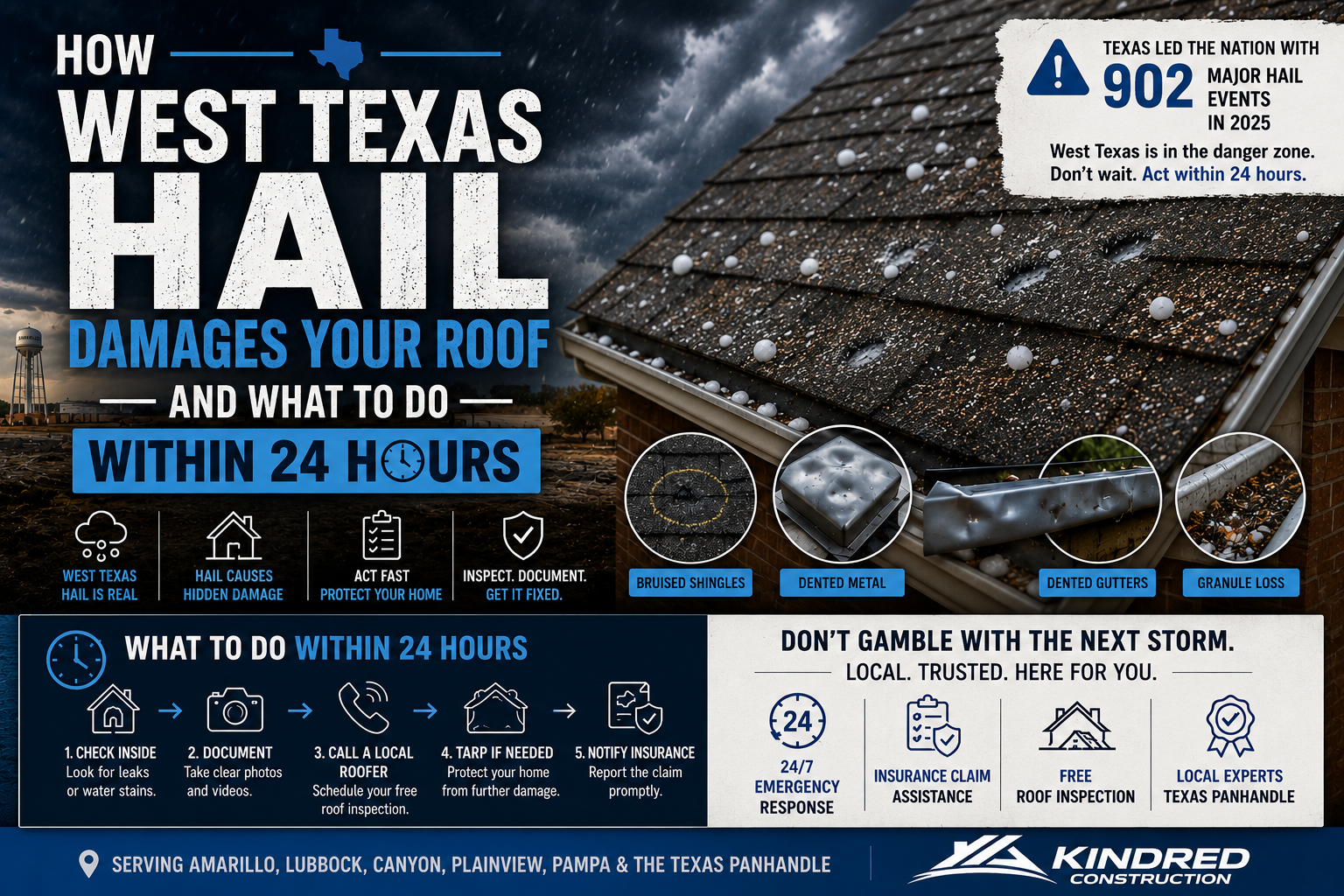
Did a hailstorm just hammer your roof, and now you have only hours to act? That one window often separates a quick fix from a 5-figure rebuild. Texas led the nation with 902 major hail events in 2025, more than any other state, and West Texas sits right inside that danger zone.
From Amarillo to Lubbock, golf-ball-sized hail strikes asphalt and metal in seconds, then leaves roof damage you cannot always see from the yard. The good news is simple. What you do in the first 24 hours after a hailstorm decides how smooth your insurance claim and your repair turn out.
This guide shows exactly how hail damages your roof across the Texas Panhandle, the signs of hail damage worth catching early, and the steps that protect your home from further damage before the next round rolls in.
What Hail Actually Does to a West Texas Roof
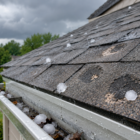
Hail does more than dent the surface. Each stone bruises the shingle, cracks the protective layer, and knocks loose the granules that shield the asphalt from sun and rain. Once those granules wash into your gutters and downspouts, the shingles age fast and start to leak.
Why West Texas Sits in a High-Risk Hail Corridor
The Texas Panhandle runs through one of the most active hail corridors in the country. Dry air, strong updrafts, and high winds let hailstones grow large before they drop. Towns like Canyon, Plainview, and Pampa see repeat hailstorms through West Texas hail season, mostly spring into early summer.
How Hail Breaks Down Shingles, Metal, and Soft Metals
Here is how different roofs take the hit when large hail and wind and hail arrive together:
- Your asphalt shingles show round impact marks, bruising, and missing granules that expose the mat below.
- Your metal roofing collects dents and dimples that weaken the panel and can void parts of a manufacturer warranty.
- Your soft metals, like flashing, vents, and gutter aprons, dent first and flag hidden hail damage.
- Your ridge and valley lines, drip edge, and soffit and fascia crack where water later sneaks in.
- Your skylights and seals split, which lets heavy rain reach the roof decking and underlayment.
Signs of Hail Damage on Your Roof You Can Spot From the Ground
You do not need to climb up to catch the early warning signs. A careful ground-level inspection from the yard and driveway tells you plenty. Walk the perimeter slowly and look up, down, and around the house.
Common signs of hail damage that show from below include:
- Dented gutters and downspouts with fresh bright marks along the metal.
- Granules in gutters or piled near the base of the downspouts.
- Missing shingles, cracked shingles, or torn pieces across the lawn.
- Damaged flashing and damaged vents around chimneys and pipes.
- Water stains, ceiling leaks, or attic moisture showing up indoors after the storm.
Hidden Hail Damage Only a Professional Roof Inspection Finds
Some hail damage hides where eyes on the ground cannot reach. Soft spots, bruised shingles, and fine cracks and punctures pass for normal wear until a roof leak proves otherwise. A trained eye, a drone inspection, and chalk on every impact mark reveal the full scope of loss. Our crews handle that during a free roof inspection, so nothing slips past the insurance adjuster.
What to Do Within 24 Hours After a Hailstorm
The clock matters more than most homeowners think. Acting in the first 24 hours after a hailstorm lowers repair costs, mold risk, and claim friction. Move fast, but stay safe.
Run through these steps as soon as the storm passes:
- Check inside first and look for water stains, drips, or a fresh roof leak before anything else.
- Do not climb on your roof, since wet bruised shingles turn slick and unsafe.
- Document the damage with clear photos and short videos from the ground.
- Call a local roofing company to schedule a free roof inspection and mark every hit.
- Request emergency roof tarping if water is getting in, which creates a temporary waterproof barrier for up to 90 days.
- Give your insurance company prompt notice while the damage is still fresh.
Filing a Hail Damage Insurance Claim in Texas
Texas gives you up to 1 year to file a hail damage insurance claim, but waiting works against you. The sooner you report it, the harder it is for an insurance company to blame wear and tear. Strong documentation wins fair payouts.
Understanding ACV, RCV, and Your Deductible
| Term | What it means | Why it matters |
| Actual cash value (ACV) | Payout after depreciation is removed | Smaller check, common on older roofs |
| Replacement cost value (RCV) | Full cost to replace at today’s price | Higher payout, released after the work |
| Deductible | Your share before coverage starts | Set by your homeowners insurance policy |
| Scope of loss | The adjuster’s list of covered damage | Drives your final settlement |
Avoid Storm Chaser Contractors
After every hailstorm, out-of-town crews flood neighborhoods with door knocks and cheap quotes. Many vanish long before the workmanship warranty ever matters. A licensed roofing contractor with a local address and real insurance claim assistance protects you after the job ends too. Kindred Construction pairs storm damage restoration with honest written estimates across Amarillo, Lubbock, and the Texas Panhandle.
Repair or Replace After Hail Damage
Not every roof needs a full roof replacement after hail. The call depends on hail size, roof age, and how deep the structural damage runs.
- Choose roof repair when hits stay isolated and the roof decking holds sound.
- Choose roof replacement when bruising, missing granules, and leaks cover wide areas.
- Ask about Class 4 shingles or impact-resistant shingles to cut future hail damage.
When storms push moisture inside, the same team also handles water mitigation. Kindred Construction also offersfinancing, so a sudden emergency roof repair never stalls your budget.
Beat the Next Storm Before It Beats Your Roof
West Texas weather does not wait, and neither should your response. Every hour after a hailstorm counts toward a cleaner repair and a stronger insurance claim. You now know how hail damages your roof, the signs of hail damage to catch early, and the exact moves to make within 24 hours.
Quick photos, a fast roof inspection, and emergency roof tarping keep small problems from turning into a 5-figure rebuild. When the sky clears over Amarillo, Lubbock, Canyon, Plainview, or Pampa, get a real expert on the roof the same week.
Kindred Construction brings 24/7 emergency response, insurance claim support, and a free roof inspection to homeowners across the Texas Panhandle. Do not gamble with the next round of large hail. Contact us today and protect your roof while the damage is still fresh.
People Also Ask About West Texas Hail Damage
What does hail damage look like on a roof?
Look for dents, bruised shingles, and missing granules across the surface. Soft metals like flashing and vents usually show marks first. Granules in gutters confirm your roof took a real hit.
How soon should I call a roofer after a hailstorm?
Call within the first 24 hours after a hailstorm when you can. Quick action strengthens your insurance claim and limits further damage. A fast roof inspection catches hidden damage before it spreads.
Will homeowners insurance cover hail damage in Texas?
Most homeowners insurance policies cover sudden hail damage and wind damage. Your deductible and policy wording decide the actual payout. File with prompt notice to avoid a denied claim.
Can I inspect hail damage myself?
A ground-level inspection is safe and smart right after the storm. Never climb on wet or bruised shingles. Leave the rooftop professional roof inspection to a licensed roofing contractor.
How long does an emergency roof tarp last?
A properly installed emergency roof tarp holds for up to 90 days. It works as a temporary waterproof barrier until repairs begin. That window protects your home through the full claims process.