After a hailstorm, a roofer may offer a free roof inspection. You may then wonder if you should call your insurance company first. Both people inspect the same roof, but they have different jobs.
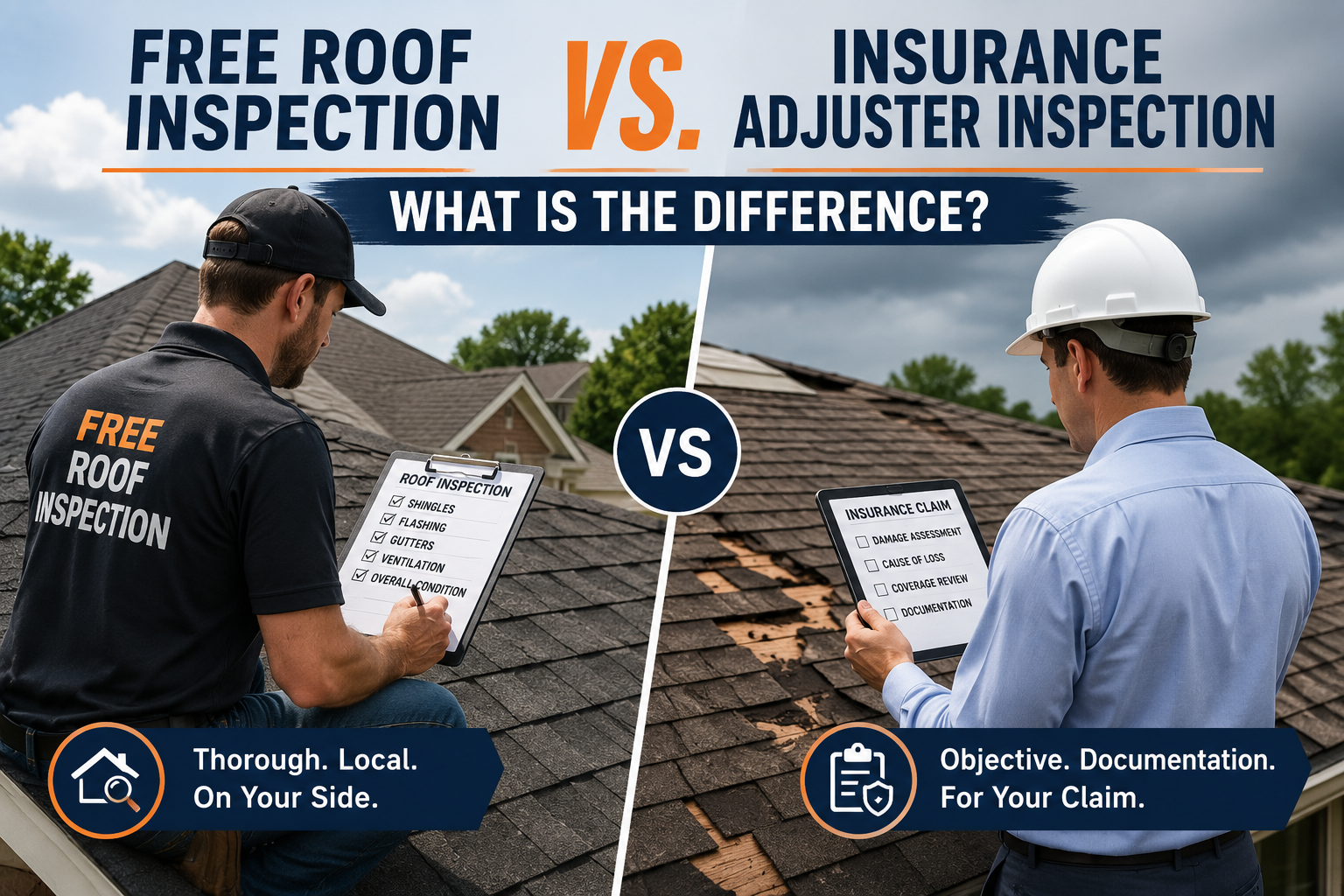
A roofing contractor looks for damage and explains the repair work your home may need. An insurance adjuster checks the loss under your policy and decides what the carrier may pay. This is the simple difference between a Free Roof Inspection vs. an Insurance Adjuster Inspection. You may need both, but you should understand the order before you begin a roof insurance claim.
Texas homeowners deal with this often. The National Weather Service recorded 5,432 major hail events in 2025, and Texas had the most of any state. Texas and Kansas recorded the largest number of hail events. When we know who each inspector works for, the claim process feels less confusing.
Two People Can Inspect One Roof for Different Reasons
Start with one clear question: who pays the inspector?
A roofing contractor offers a free roof inspection because they hope you will choose them if your roof needs work. Their job is to document real storm damage. An insurance adjuster works for the insurance company and prepares an estimate under your policy.
Neither person is the problem. Good contractors and adjusters act professionally. However, they do not have the same role. Your contractor helps you understand the roof. Your adjuster inspection helps the carrier decide the claim payment. If their numbers differ, clear proof can help both sides review the same facts.
Why a Free Roof Inspection Comes First for Many Homeowners
A free roof inspection gives you information before you file. You can see photos and compare the cost with your wind and hail deductible. That way, you do not file a small claim that may not help.
This step helps with a roof inspection for insurance after hail events. A local contractor can identify the date of loss from storm records and explain the report clearly.
What a Thorough Free Roof Inspection Includes
A real inspection is more than a quick look from the driveway. It often takes 45 to 90 minutes, depending on roof size, pitch, and access.
On-Roof and Attic Checks
- Each accessible slope should be walked. This helps find granule loss, shingle bruising, and missing shingles instead of checking only the easiest corner.
- The inspector should check soft metals, including vents, gutters, and flashing. Hail dents on these parts can support the storm pattern seen on shingles.
- Wind damage indicators include creased shingles, torn tabs, and lifted ridge caps.
- Roof decking should be checked where access allows. An attic inspection can show water damage, daylight gaps, weak roof ventilation, and signs that moisture entered the home.
- Interior leaks and ceiling stains should be documented when they connect to a roof issue.
The Report You Should Receive
Your inspection should include photo documentation and a written scope report. It should explain repair or replacement. It cannot promise a claim result, because your policy and insurance adjuster make that decision.
This report helps you decide whether a claim makes sense. Kindred Construction has inspected more than 3,000 roofs across the Panhandle and South Plains. If our team finds no damage worth claiming, we put it in writing. You can schedule a free inspection after a storm.
What Happens During an Insurance Adjuster Inspection?
Once you file, the carrier assigns an insurance adjuster. The visit can happen within days or weeks, depending on storm claim volume. The adjuster inspects the reported loss and writes a scope of work that reflects the coverage they believe applies.
How Insurance Adjusters Inspect Roofs
Insurance adjusters inspect roofs with a method that often includes these steps:
- They mark test squares, often 10 ft x 10 ft, on roof slopes and count hail hits.
- They look for storm damage and separate it from normal wear.
- They consider functional versus cosmetic damage. Some policies cover damage that affects roof performance but exclude marks that only change appearance.
- They review roof age and condition. These details can affect replacement cost coverage, actual cash value, and depreciation.
- They review water damage, interior leaks, and ceiling stains that may connect the roof loss to the date of loss.
The adjuster report only addresses the claimed loss. It may not discuss roof underlayment, roof ventilation, or work a contractor recommends while the roof is open. A missed rear slope can create an incomplete estimate. Your contractor can point out documented items during the adjuster inspection.
Free Roof Inspection vs. Insurance Adjuster Inspection at a Glance
| Point of comparison | Free Roof Inspection | Insurance Adjuster Inspection |
| Who pays | Your roofing contractor absorbs the cost | Your insurance company assigns and pays |
| Who the inspector represents | You, the property owner | The carrier writing the check |
| When it happens | Before you file | After the claim is assigned |
| Main goal | Find and document damage | Confirm covered loss and set the payout |
| What you receive | Photo report, scope of work, repair estimate | Claim estimate, depreciation, and deductible math |
| Cost to you | $0 and no obligation | $0, but limited to the claim |
When a Paid Roof Inspection Makes More Sense
A paid roof inspection comes from an independent inspector who does not expect repair work. It can help when you need a neutral report. The roof inspection cost depends on the home, access, and inspector. For roof inspection cost in Texas, homeowners often see about $150 to $400 for a standard single-family property. Steep pitch, drone work, multiple stories, complex valleys, or large square footage can raise the price.
A paid roof inspection can help when:
- You are buying or selling a home and need a roof certification rather than a repair estimate.
- Your claim was denied and you need independent photos before an appeal.
- You manage a commercial property and need yearly documentation for a lender, lease, or underwriting file.
- You want a report from someone with no interest in selling a new roof.
The Best Order After Storm Damage
You do not need to rush into a claim. First, protect the home if you see an active leak. Then gather the facts. This order gives you a cleaner roof inspection before filing an insurance claim.
- Book a free roof inspection within 24 to 72 hours when possible. The contractor can record hail damage and wind damage before repairs or more weather change the roof.
- Review the report and compare the likely cost with your wind and hail deductible. A deductible is the amount you pay before insurance pays its covered share.
- File a claim only if the documented damage reasonably exceeds the deductible and your policy supports it.
- Keep your contractor present during the adjuster inspection if the carrier allows it. They can share photos and explain the scope without speaking for you or the carrier.
After the report and carrier visit, a local contractor can explain any documented difference. Kindred Construction meets adjusters on site and supports supplement filing when the first estimate misses work. We provide storm damage restoration from an emergency tarp through the final walkthrough. If water reaches drywall, our water mitigation team can help limit interior spread the same day.
When the First Estimate Misses Work
The contractor report and carrier estimate are two views of the same loss. If they do not match, photos, measurements, and moisture findings can support a supplement filing. It does not guarantee extra payment.
Wind and hail accounted for the largest share of homeowners claims in the latest available national loss data. Carriers review these claims closely. Clear photo documentation and a detailed written scope report work better than guessing. Our guide explains how to file a hail damage insurance claim.
Roof age also matters. Check how long a residential roof lasts before you expect full payment. Your declarations page tells you whether your policy uses replacement cost coverage or actual cash value. Actual cash value subtracts depreciation.
Red Flags You Should Not Ignore
Storm chasers often arrive soon after a major storm. They may offer fast answers, but you need a local company that you can reach after the work ends. The Texas Department of Insurance advises homeowners to avoid contracting scams by checking references, reviewing documents, and getting written bids.
- Do not sign paperwork because someone calls it an estimate or says you must sign before they can inspect.
- Do not let a contractor waive your deductible. Texas law does not allow this, and it can put your claim at risk.
- Avoid crews with no local address, no working local phone number, or pressure to begin repairs before the carrier approves the scope.
- Do not assign all insurance proceeds without reading every term.
These warning signs can protect your money and home. Our guide to storm chaser contractors explains them. Kindred Construction works in Potter, Randall, Gray, and Hale counties year-round, so you can reach a local team after the work ends.
Local Conditions Matter Across West Texas
Every storm leaves a different pattern. In Canyon, weathered shingles can hide bruising, so each strike zone needs careful mapping. Across Hale County, open ground can increase edge and ridge wind lift. That shapes storm damage repair in Plainview. For local help after hail, our team provides hail damage restoration in Canyon.
Some homeowners choose standing seam metal roofing after repeated hail damage. New gutter and fascia installation can address soft-metal areas that storms often damage.
Let Us Help You Start With Clear Facts
Your roof takes every storm that reaches your street. You deserve clear information before a claim decision. Start with a no obligation contractor inspection, use the insurance visit to review covered loss, and use an independent report when needed.
Kindred Construction has completed more than 1,500 storm repairs with 47 trained craftsmen. Our client portal keeps inspections, photos, and timelines in one place.
As a licensed West Texas roofing contractor, we stay with you from the first climb to the final nail. If you need a roofing contractor in Amarillo or a Lubbock roofing contractor, we can document the roof after the next storm.
Call Kindred Construction at 806-440-2167 or book your free roof inspection today. We will help you understand the roof before the carrier visit.
Frequently Asked Questions
1. Should I get a free roof inspection before filing an insurance claim?
Yes. A contractor report shows whether damage may exceed the deductible before you file. It also gives the adjuster clear photos and measurements to review.
2. Does homeowners insurance pay for a roof inspection?
Usually, the carrier does not reimburse an independent inspection. A paid roof inspection remains your cost. The carrier’s visit only reviews the reported claim.
3. Can my roofer attend the adjuster inspection?
Yes, in most cases. Your roofer can show documented hail hits, wind creasing, and damaged soft metals. The contractor should provide facts and let the insurance adjuster make the coverage decision.
4. What should I avoid saying to a roof insurance adjuster?
Stay with clear facts. Do not guess about the storm date, make up a repair amount, or describe damage you cannot support. Use your inspection report, photos, and the date of loss.
5. Will insurance cover a 15-year-old roof?
Policy language decides this, not age alone. Some Texas policies change older roofs from replacement cost coverage to actual cash value. Depreciation then reduces the payment. Review your declarations page at renewal. If a claim-denied letter is unclear, request the policy reason in writing.