
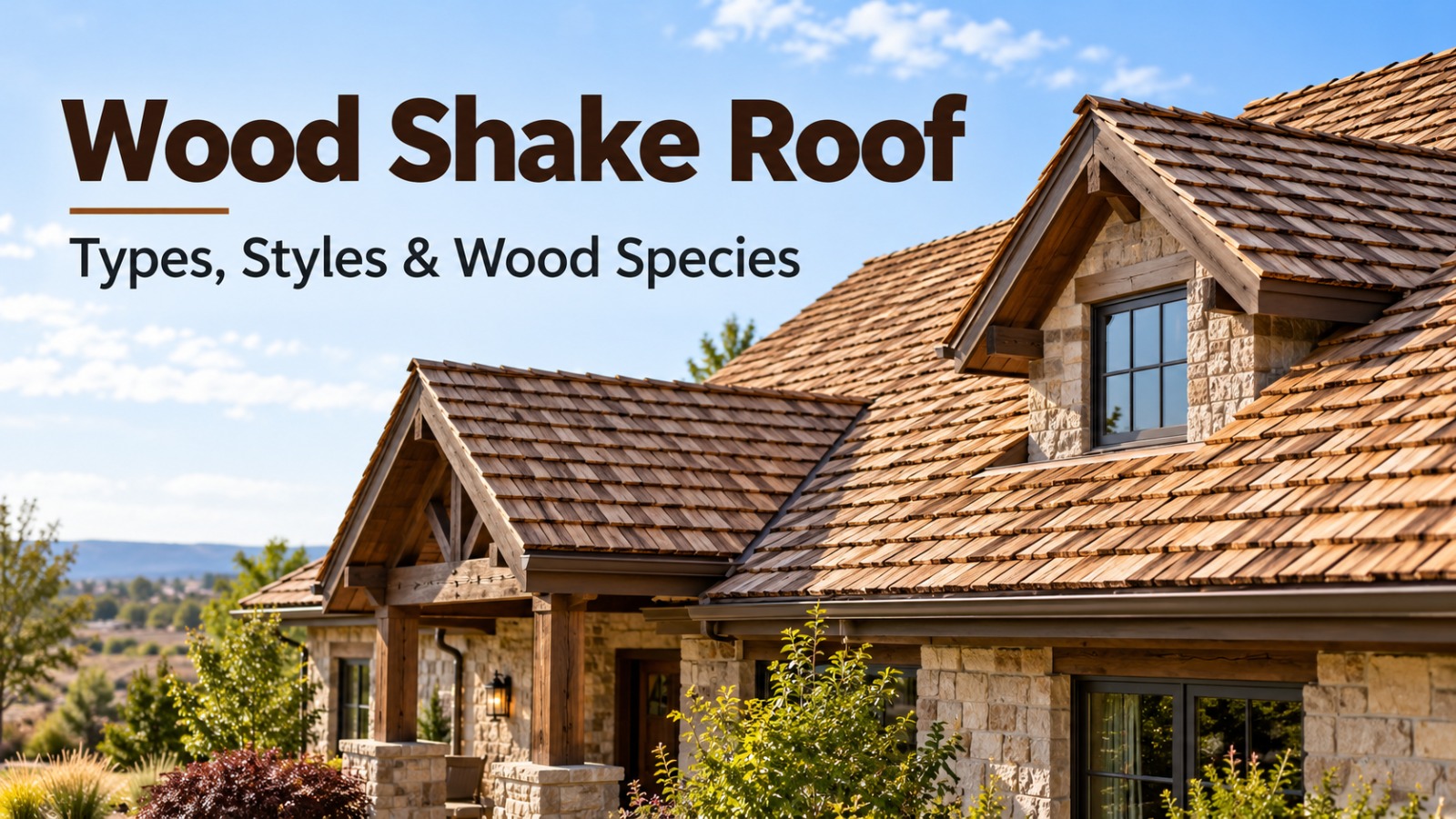
What Is a Wood Shake Roof? Types, Styles and Wood Species Explained
What gives a roof that hand-carved look you notice from the street? A wood shake roof uses thick pieces of real wood, usually cedar, laid in overlapping rows to shed rain. Most shakes have a split face, although some types have sawn faces.
The natural grain gives each piece its own texture, while the thick edges create deep shadow lines. Together, these details give cedar the rustic charm that draws many homeowners to wood.
In West Texas, though, the choice needs more thought than appearance alone. According to Triple-I, Texas recorded 902 major hail events in 2025. That led the country and exceeded twice the total for second-place Kansas.
Before you choose shake roofing, it helps to understand the types, wood species, grades and care involved. This guide also explains the local code rules that affect an Amarillo roof.
What Is a Wood Shake Roof?
A traditional shake starts as a piece of wood split along its grain. Roofers nail the pieces in rows, with each row covering part of the one below. This overlap helps shed water, while the roof’s felt, flashing and slope help protect the structure beneath it.
If someone calls it a wooden shake roof, they usually mean this same roof covering. You may also hear the broad terms wooden roofing and roofing shakes. Some homeowners say shaker roof, although wood shake is the standard term.
- 1Split faceRough grain on top of each shake.
- 2Thick butt endThe visible lower edge of every row.
- 3Water pathRain steps down from row to row.
- 4Offset jointsGaps never line up between rows.
Most traditional shakes share these features:
Split face
The rough surface follows the wood’s grain, so each piece looks slightly different. Tapersawn shakes are the main exception.
Thick butt end
This exposed lower edge gives the roof its depth. Thickness varies by type, from about 3/8 in. to more than 1 in.
Tapered shape
Most shakes grow thinner toward the top to fit beneath the next row. Straight-split shakes have a different profile.
Random widths
Different widths give the roof a less uniform look. Roofers still offset the joints carefully to help keep rain out.
How Wood Shakes Are Made
Traditional shake makers use a froe and mallet to split wood along its fibers. Many mills now split thick blanks, then cut them diagonally with a bandsaw. This creates hand-split and resawn shakes with a rough front and a sawn back that rests against the roof.
Wood Shakes vs Wood Shingles
The main difference lies in the surface and thickness. Wood shingles have smooth, sawn faces, while most wood shakes have a rougher face and thicker edge.
As a result, a wood shingle roof tends to look neat and even. By comparison, shake roofs have more texture and deeper shadows.
If you have searched for a wood shake shingle roof, the table below helps separate these closely related products.
| Feature | Wood Shakes | Wood Shingles |
|---|---|---|
| How mills make them | Usually split on 1 face; tapersawn types have 2 sawn faces | Sawn smooth on both faces |
| Butt thickness | About 3/8 in. to 1 in. or more, by type | Common sizes reach about 1/2 in. |
| Finished appearance | Thick edges and a textured surface | Smooth faces and even rows |
| Felt interlays | Between courses in standard shake installation | No felt between courses; underlayment is separate |
| Gap between pieces | Usually 3/8 in. to 5/8 in. | Usually 1/4 in. to 3/8 in. |
| Typical recommended minimum slope | 4:12 | 3:12 |
Product instructions and local code control how roofers fit the shakes. A 4:12 slope means the roof rises 4 in. over a 12 in. horizontal run.
If you prefer a smoother finish, wood shingle roofing may suit your home better. Older roofs sometimes contain both wood roof shingles and shakes after past repairs. Because their thickness and installation differ, a roofer should assess the mix closely.
Kindred Construction can identify the material during an inspection. From there, we can explain which repairs fit your existing roof.
Types of Wood Shakes
Wood roof shakes come in several profiles, so the name alone does not tell you what the roof will look like. Thickness also matters, but it does not prove hail resistance without product testing.
- 1Heavy resawnAt least 3/4 in. at the butt.
- 2Medium resawnAt least 1/2 in., same split face.
- 3TapersawnSawn on both faces, still thick.
- 4Straight-splitLargely even thickness.
Hand-Split and Resawn Shakes
These shakes suit homes where a rough cedar texture forms part of the design. The main options include:
- Heavy split and resawn shakes: These commonly measure at least 3/4 in. at the butt. Their thicker edges create deeper shadows, although hail can still split the wood.
- Medium split and resawn shakes: These commonly measure at least 1/2 in. at the butt. If you want a lighter texture, they offer the same split-face style with less thickness.
Tapersawn Shakes
Tapersawn shakes have sawn faces on both sides, yet their thickness sets them apart from shingles. If you like cedar but prefer a more even surface, this profile offers a useful middle ground.
The Cedar Shake & Shingle Bureau product guide explains these manufacturing differences and the separate shingle labels.
Straight-Split Shakes
Straight-split shakes have split faces and a largely even thickness from top to bottom. They can suit historic work where the original roof used this profile. However, the installer needs to follow the details for that specific product.
Fire-Retardant and Preservative-Treated Shakes
Factory treatments serve different purposes, so choose them around the roof’s needs:
- Fire-retardant treated shakes: Manufacturers use a pressure-impregnated treatment to improve fire performance. A product with a Class B rating can form part of a tested assembly that achieves a Class A fire rating.
- Preservative-treated shakes: These help protect against decay and insects, including termites. For CSSB-certified products, manufacturers offer preservative or fire-retardant treatment, rather than both together.
Wood Shake Roof Styles and Exposure
The same cedar can look quite different depending on the row layout and the amount of wood showing. These choices affect both appearance and installation:
- Exposure: This means the visible length below the row above. Common examples include 7.5 in. for 18 in. shakes and 10 in. for 24 in. shakes. The product and roof slope set the allowed exposure.
- Straight or staggered rows: Straight rows give the roof an orderly pattern. Staggered rows create more variation, but the roofer must still maintain the required overlap.
- Natural weathering: New cedar often has a honey or cinnamon tone. Sun and moisture gradually change it to a silver-gray patina, although shaded areas may weather differently.
Decorative fishscale, diamond and sawtooth cuts usually belong to shingle designs, especially on gable walls. If you like that detail on a wood shingled roof home, confirm whether the sample suits a wall or roof.
Photos can make these textures hard to compare. Kindred Construction brings real cedar samples to your kitchen table, so you can see the grain and thickness together.
Wood Species Used for Shake Roofs
Cedar is a common choice for roof shakes, but other species also appear in wooden roofing. If you compare them, consider the wood’s grade, approved roof use and local supply as well as its name.
| Species | What to Know Before Choosing |
|---|---|
| Western Red Cedar | Its natural oils resist decay and insects. It also has low shrinkage and holds nails tightly when sound wood and proper fasteners work together. |
| Alaskan Yellow Cedar | Dense wood with fine grain and good natural rot resistance. |
| Redwood | Durable heartwood, though roofing supply can be limited. |
| Cypress | Heartwood can resist decay, but quality and source matter in damp climates. |
| Pine | Often a lower-cost wood, but roof use needs a suitable grade and any required preservative treatment. |
| Teak and wallaba | Specialty hardwood options; verify each product’s species, grading and approval rather than treating them as equal. |
Cedar Shake Grades and Grain
A bundle’s grade tells you more than its color or thickness. Two samples may look alike at first, yet their grain can make them respond differently to rain and heat.
Edge Grain, Flat Grain and Slash Grain
Growth rings show how the tree grew. Their angle to the shake’s face helps explain how much the wood may move:
- Edge grain: The rings run roughly perpendicular to the face. This grain tends to stay more stable as the wood gets wet and dries.
- Flat grain: The rings run more nearly parallel to the face. As a result, the wood has a greater tendency to cup or change shape.
- Slash grain: This generally means flat grain, rather than a separate premium or intermediate grade. Check the bundle’s grading label instead of relying on a seller’s description.
The USDA wood properties guide helps explain the distinction between slash grain and edge grain.
Shake Grades and Bundle Labels
Look for a Cedar Shake & Shingle Bureau label showing the product grade, mill and inspection details. For a cedar shake shingle roof quote, make sure the paperwork clearly names shakes or shingles.
- Premium grade: These shakes use 100% edge grain, clear heartwood, with no knots or sapwood.
- Number 1 grade: These shakes allow up to 20% flat grain per bundle. They can cost less, though the grain mix differs from Premium.
- Lower grades: Limits vary by product. More defects or sapwood can restrict where the material belongs, so check its approved use.
Shingles follow a separate system. No. 1 Blue Label identifies the highest shingle grade, while Red Label and Black Label identify lower grades. They are not interchangeable with shake grades.
When comparing a West Texas roofing contractor, look for these details in writing. Kindred Construction includes the grade and exposure in the quote, so you know what the price covers.
How a Wood Shake Roof Is Installed
Wood needs room to expand and a way to dry after rain. If poor roof work traps moisture or leaves gaps that let water in, cupping, rot or leaks can follow.
- 1Solid sheathingRequired under wood in Amarillo.
- 2Shake courseGaps for swelling, joints offset.
- 3Felt interlayNo. 30 felt between courses.
- 4Stainless steel nailsResist corrosion and rust stains.
- Sheathing: Some approved systems use spaced boards, while others use solid sheathing. Local code and the treatment manufacturer’s instructions decide what suits the roof.
- Felt interlays: Roofers place strips of No. 30 felt between shake courses to help control wind-driven rain. Correct placement keeps the felt above the exposed wood.
- Spacing: Gaps, often 3/8 in. to 5/8 in. between wood shake shingles, leave room for swelling. Roofers also offset joints between rows.
- Stainless steel nails: These resist corrosion and help prevent rust stains. Nail size, placement and compatibility with treated wood still need to match the product instructions.
The CSSB roof installation manual provides the details behind these steps, including ventilation and flashing.
Amarillo Code Rules for Shake Roofs
- Solid sheathingBeneath wood shakes and shingles
- Grade 1 or betterUnder CSSB grading
- Roofing permitFor all roofing projects
- Tear-off plannedRegistered contractor, old covering removed
The City of Amarillo requires solid sheathing beneath wood shakes and shingles. It also requires at least Grade 1 material under Cedar Shake & Shingle Bureau grading.
A permit applies to all roofing projects, and contractors must register before working within city limits. For a cedar replacement, plan for a tear-off of the old covering. The city lists limited exceptions for separate metal roofing systems, rather than a general right to cover old layers.
If you compare roofing contractors in Amarillo, confirm who handles the permit, sheathing and removal. These details should form part of the quote before work starts.
Benefits of a Wood Shake Roof
Cedar’s appeal goes beyond its texture, although each benefit depends on the complete roof system.
Curb appeal and home value
A well-kept shake roof can complement ranch, historic and custom homes. Its effect on resale value depends on local buyers and roof condition.
Natural insulation
Wood slows heat transfer, which contributes to the roof’s thermal performance. However, it does not replace proper attic insulation or ventilation.
Wind resistance
Correct fastening helps shakes resist uplift. If winds reach 70 mph or more, performance depends on the roof’s design and condition, not cedar alone.
Simple spot repairs
Crews can replace damaged wooden shakes individually if the surrounding roof remains sound. New pieces weather over time, but a color match within 6 to 9 months is not certain.
Dry air can help wood roofs dry between storms, but shade and trapped leaves can still support mold and mildew. The Oregon State University Extension Service describes a potential 10-fold lifespan difference between dry Eastern Oregon and warm, wet Hawaii. That comparison shows how much climate matters; it does not predict a Texas roof’s service life.
Common Problems With Wood Shake Roofs
If you know what to look for, you can arrange repairs before damage spreads beneath the shakes.
- 1Hailstone strikeImpact lands on the exposed face.
- 2Split along the grainLooks like weathering at a glance.
- 3Dated photosRecord the damage for claims.
Splitting, cupping and curling
Repeated wetting and drying can change the wood’s shape. UV exposure also wears the surface, so raised edges need a closer inspection.
Hail splits
Hail can split cedar along the grain. Because weathering can leave similar marks, dated photos help document damage for insurance claims.
Moss, algae and rot
Leaves can block the keyways, which are the gaps between pieces. Trapped moisture then creates conditions that favor growth and decay.
Fire and insurance limits
Untreated cedar has no fire rating. Before choosing wood, confirm which roof types your insurer accepts and what records it needs.
On shaded lots in Sleepy Hollow or similar Amarillo neighborhoods, inspect north-facing slopes for trapped debris. If trees slow drying, those areas may need more care than open, sunny slopes.
Some labeled cedar products achieve Class 3 or Class 4 impact ratings under UL 2218. Check the exact label, since the rating does not apply to all cedar and cannot guarantee a damage-free roof.
If a storm has already damaged your shakes, Kindred Construction can document the condition with dated photos during a storm damage restoration inspection.
Wood Shake Roof Lifespan, Cost and Maintenance
A 30-40-year lifespan may be possible with suitable cedar, good installation and regular care. However, hail, trapped moisture and poor repairs can shorten that life. An inspection gives you a more useful outlook than age alone.
For early budgeting, treat $8-$14 as a rough estimate of installed pricing per ft², rather than a confirmed West Texas rate. Heavy Premium shakes, steep slopes, deck repairs and tear-off can raise the total. A written local quote should show those costs separately.
Rough budget range
Pick a roof area to see the $8-$14 per ft² planning range. It is a starting point only, not a quote.
- 1Inspect
- 2Clear debris and keyways
- 3Repair promptly
- 4Treat per manufacturer
You may see advice about treatment every 3-5 years, but that is not a rule for every cedar roof. Follow the treatment manufacturer’s guidance, especially if the wood already has a factory treatment. Routine cleaning and prompt repairs remain essential, and high-pressure washing can damage cedar.
Kindred Construction provides a dated maintenance calendar after installation to help you plan this care. If the upfront cost needs more planning, our roof financing options can help spread payments, subject to approval and terms.
Real Cedar vs Synthetic and Steel Shake
If you like cedar’s texture but want less upkeep, wood shake composite roofing and stone-coated steel offer other choices. Compare the exact products, because ratings and warranties vary.
| Feature | Real Cedar Shake | Synthetic Shake | Stone-Coated Steel Shake |
|---|---|---|---|
| Upkeep | Debris removal, repairs and treatment if appropriate | Inspections and cleaning; follow product guidance | Inspections, debris removal and product-specific cleaning |
| Hail | Can split; some products earn Class 3 or 4 | Some products earn Class 4 | Some products earn Class 4 under UL 2218 |
| Fire | Class A requires the listed treated assembly | Rating depends on the product and assembly | Confirm the listed Class A assembly |
| Lifespan | 30-40 years may be possible; conditions vary | Product and conditions determine service life | Often marketed at 40-70 years; verify product evidence and warranty |
Real cedar suits homeowners who value natural wood and accept its care needs. If lower upkeep matters more, compare synthetic shake with stone-coated steel roofing. For hail concerns, request proof of the exact product’s Class 4 impact rating before choosing.
Is a Wood Shake Roof Right for Your Home?
Start with the home itself, then weigh the cost and care you can manage:
Your pre-quote checklist 0 of 3 done
In the Wolflin Historic District, original roof details may influence the choice alongside weather performance. Homeowners comparing roofers in Lubbock or a roofing contractor in Canyon should review the rules for their own location.
Quick check: is cedar your match?
Three questions, about 20 seconds.
1. What matters most in how your roof looks?
2. How much ongoing care can you plan for?
3. What do your insurer and HOA allow?
Kindred Construction measures the roof slopes and checks the structure before recommending suitable residential roofing options. If you would like that comparison, you can schedule a free inspection.
Wood Shake Roofing Services in West Texas
A wood shake roof works best when the species, grade and installation suit the home. Clear edge grain cedar, correct felt interlays and code-compliant sheathing give the roof a sound start. From there, regular care helps protect the wood through changing seasons.
Kindred Construction brings more than 15 years of West Texas experience, over 3,000 completed roofs and a 10-year workmanship guarantee. We help you compare cedar samples, understand the quote and plan for the care your roof will need.
Explore our wood shake roofing services or call 806-440-2167 to arrange a free roof inspection. We can assess your roof and explain which options suit your home and budget.